
Explainer
Coffee freshness and storage
Roast dates, airtight containers and freezing.
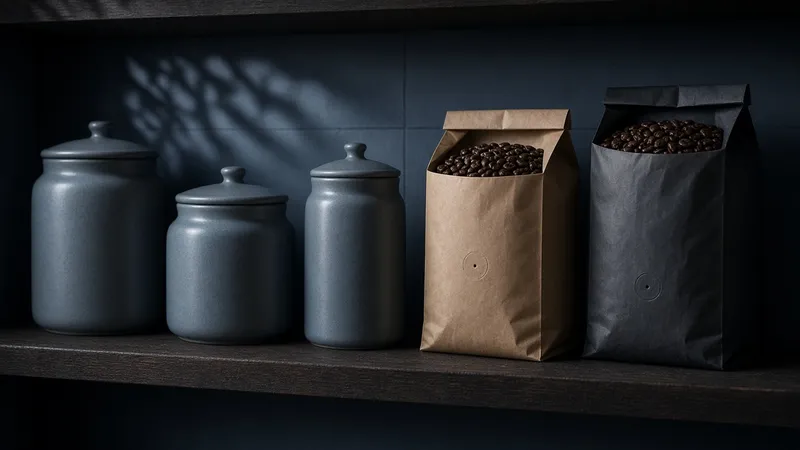
- Look for a roast date, not just a best-by date.
- Store beans airtight, away from light, heat and moisture.
- Grinding just before brewing preserves aroma.
Degassing after roast
Freshly roasted coffee releases carbon dioxide for days. That gas fuels pour-over blooms and can disturb espresso if you grind too soon without adjusting.
Many specialty roasters suggest brewing a few days after roast, then tasting across the following weeks. There is no single universal peak day.
Valve bags vent CO₂ while limiting oxygen. After opening, oxygen, moisture, heat and light speed staling.
The four staling accelerators
Store beans cool, dry, dark and sealed. A pantry cabinet beats a sunny sill. Skip the fridge for daily beans: condensation forms when cold beans meet kitchen air.
Freezing can work for longer storage if portions are airtight and not repeatedly thawed. Moisture control is the hard part.
Whole beans keep aromatic life longer than pre-ground coffee. Grind close to brew time when you care about aroma.
Canisters versus hoppers
Opaque airtight canisters with sound gaskets slow oxygen exchange. Clear jars display beans and also display them to light.
Vacuum lids help some workflows; opening ten times daily still admits air. Keep a small working jar and leave the rest sealed.
Do not treat the grinder hopper as long-term storage.
Weekday workflow
Buy amounts you finish in a few weeks. Open one bag at a time.
For travel, pre-portion doses airtight rather than crushing a half-full valve bag in luggage — see Travel coffee kits: camp brewing and hand grinders.
Espresso dial-in drifts as beans age; expect small grind changes and keep notes.
Cup signals of staleness
Stale coffee tastes flat or papery even with correct grind and ratio. You cannot extract aromatics that already oxidized away.
Oily dark roasts can turn rancid in poor storage. Wash vessels between very different roast styles.
If flavor collapses after a heat wave or move, check storage before blaming the grinder.
Buy for turnover, not a mythical peak day
The NCA storage guide recommends buying enough freshly roasted coffee for one or two weeks. This is a shopping-and-storage starting point, not a promise that every coffee peaks on the same day. A best-by date and a roast date answer different questions: the former is the seller’s shelf-life guidance, while the latter helps explain how recently roasting occurred.
Before buying a large bag, compare your normal dose and brewing frequency with the quantity you can actually finish. A household that alternates several bags may age each open bag longer than a household with a single working coffee. Ask the roaster about rest and use for that particular roast rather than applying an internet day-by-day schedule to every bean.
Divide the stock without contaminating it
Use a clean, dry container and let it dry completely after washing. Old oily residue in a canister can taint a fresh bag, especially when moving between dark and lighter roasts. Keep the manufacturer’s identifying label or copy the coffee name and opening date onto the working container so freshness comparisons are not based on memory.
When portioning a bulk purchase, avoid leaving all the coffee exposed while you arrange jars. Prepare the containers first, transfer promptly and seal the reserve. Keep a small working quantity accessible and the reserve away from the kettle, oven and dishwasher exhaust. An attractive transparent jar beside the stove solves neither light exposure nor heat exposure.
Freezer decisions and condensation
The NCA notes differing views on cold storage and emphasizes truly airtight containers because coffee retains moisture and surrounding odors. Freezing is not a repair for beans that already smell stale. It is a way to manage reserve coffee when you cannot use it promptly, with moisture control as the central requirement.
For a simple household workflow, portion the reserve before freezing so you are not opening and closing the entire supply during every breakfast. Follow the storage-container and roaster instructions. Avoid moving the daily working bag repeatedly between cold storage and a warm kitchen. Inspect the seal rather than assuming a decorative lid or loosely folded retail bag is an effective moisture barrier.
Separate storage failure from brewing failure
If familiar coffee suddenly tastes dull, compare a freshly opened portion using the same brewer, water and grind. A new grinder is not the first response to beans that have sat beside a hot appliance. Conversely, a sharp espresso shot does not prove the beans are stale; distribution, grind and yield may still be responsible.
Use aroma, bag history and a controlled comparison together. Lack of bloom is not a standalone freshness test because roast and brewing conditions also affect bubbling. If beans develop visible mold or have been wetted in storage, discard them rather than trying to roast, grind or brew the problem away. Quality decline and a contamination concern are different decisions.
FAQ
Freezer storage?
Optional for long airtight portions. For this week’s beans, a cool opaque canister is simpler.
Hopper OK overnight?
Yes for short convenience. Not for multi-week aging under lights.
Vacuum every bag?
Useful for bulk buys. Portion so daily opening does not undo the seal on everything.
Pre-ground life?
Shorter than whole bean. Buy smaller packs and reseal.
Next step
After Coffee freshness and storage, skim the glossary or the hub index.
Sources
Spec notes for Coffee freshness and storage are compiled from maker docs and public references — not a hands-on review. Confirm live specs before buying.